

Why biodiversity matters for clean water, pollination and carbon
A new synthesis of 423 studies gives the biodiversity debate a practical focus: what happens to the services people depend on when ecosystems lose variety?
The UN biodiversity conference, COP17, is scheduled for October 19 to 30 in Yerevan, Armenia. Its agenda includes the first global review of progress under the Kunming-Montreal Global Biodiversity Framework, according to the Convention on Migratory Species. As those discussions continue, a study published earlier this month offers a useful way to read the coverage.
What the new research found
Emma R. Moffett and colleagues published their synthesis in Nature Ecology & Evolution on October 6. The authors’ abstract, available through King’s College London, reports that biodiversity improves most of the ecosystem functions and services examined.
The pattern varies by service. Water quality and pollination often showed linear relationships with diversity, suggesting that additional diversity makes an additive contribution. Oceanic blue-carbon sequestration was especially sensitive in the analysis.
Hazard regulation showed a different pattern: it appeared less sensitive to overall diversity and more dependent on particular species with distinctive roles. Those species still depend on the wider ecological community. The findings therefore do not give us one percentage that applies equally to every habitat or benefit.
Why some of the carbon story is underwater
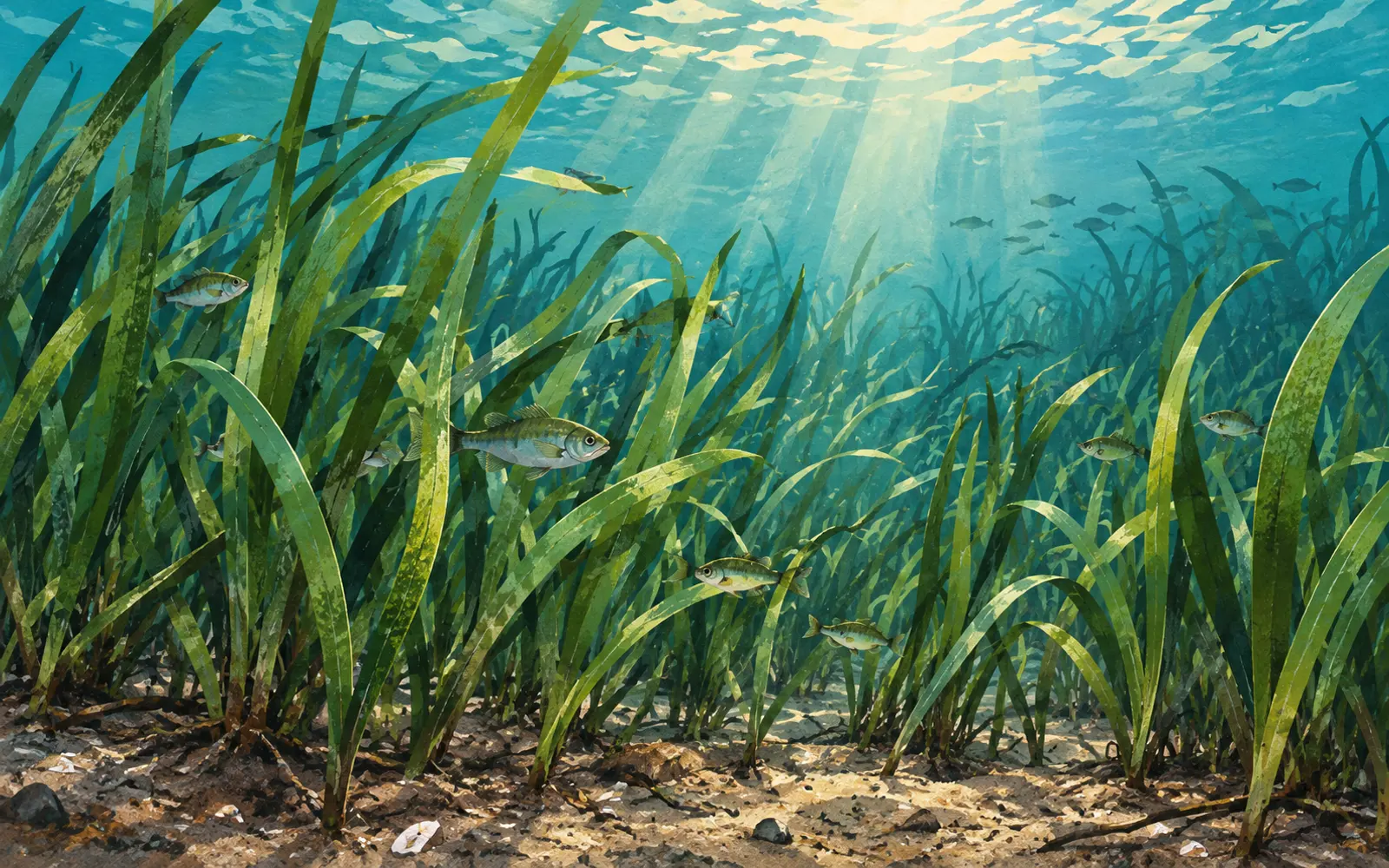
NOAA’s blue-carbon explainer describes carbon captured by ocean and coastal ecosystems. Seagrass meadows, mangroves and salt marshes take up and store carbon, much of it below ground. Looking only at the plants above the surface misses that stored carbon.
Damage to these habitats can release carbon back into the atmosphere. Protecting them also preserves other benefits, including nursery habitat for fish and protection from storms. A coastal conservation project can therefore have several purposes at once, even when its headline focuses on carbon.
How to read the next biodiversity headline
Start by asking what the report actually measures. A claim about the number of species needs different evidence from a claim about carbon storage. If an article moves between those measures, look for the explanation connecting them.
Then check the scale. Is the evidence about one site, a group of experiments or a synthesis across many studies? A broad finding can help frame a question about a local wetland, but you still need local evidence to judge a particular restoration proposal. Treat a missing measurement as a question to investigate.
It also helps to separate the scientific result from the policy response. A study can inform a conservation decision without showing that a specific policy has already worked. When reading COP17 coverage, look for the agreed decision, who will carry it out and how progress will be measured. A scheduled discussion is not evidence that its proposed outcome has been adopted.
A useful question for a local project
If a nearby park, river or coastal project asks for public support, request its baseline and intended outcome. What condition is it starting from? What will the team measure again, and when? Those details make a proposal easier to assess than a broad promise to help nature.
For a project promoting carbon storage, ask whether its monitoring also tracks habitat condition. For one promoting wildlife, ask which species or ecological measures it follows. Keep the answers beside the original proposal so you can compare them with the project’s next progress report.
Sources checked October 27, 2026: the linked research abstract, CMS conference information and NOAA background explainer. The study was published October 6; the conference runs October 19 to 30. This article uses the publicly available abstract, not a review of the full research paper. Written and edited with AI assistance. Both images are AI-generated illustrations.
SOURCES
Sources and further reading
EZ Trends links to primary documents, official announcements and established public-interest organizations. Consult the linked sources for current information.
- Convention on Migratory Speciescms.int
- authors’ abstract, available through King’s College Londonkclpure.kcl.ac.uk
- NOAA’s blue-carbon explaineroceanservice.noaa.gov