

SPIEL Essen 2026: how to choose a board game after a demo
A good demo can make a game feel easy to love. Before buying the box, ask whether you would still enjoy it with your usual players, at your own table, without someone explaining every turn.
SPIEL Essen runs from October 22 to 25, 2026, at Messe Essen in Germany. Trying games is included in admission. That makes this week’s fair a chance to compare how games actually feel to play before committing shelf space to them.
The advice below is a suggested way to assess a demo, not a ranking of releases or a report from the show floor. We have not played the games named here.
Check your day before planning your games
The organiser’s Saturday ticket notice, checked on October 19, says October 24 is sold out. It also warns that there are no on-site ticket booths. Check the official shop for current availability before making travel plans; this article cannot guarantee a ticket on another day.
Published opening hours are 10am to 7pm from Thursday through Saturday, and 10am to 6pm on Sunday, all local time. Those hours describe the fair, not a promise that a particular demo table will have a seat when you arrive.
Make a shortlist for the people you play with
Start with an ordinary game night. How many people usually come? How long do you have, including the explanation? Would everyone welcome a competitive negotiation game, or does your group prefer to work together? Write down the constraint most likely to rule a purchase out.
A game you expect to play mainly as a pair deserves a closer look at its two-player rules. Ask whether the demo uses that version. If it does not, note the gap instead of assuming the experience will transfer unchanged.
The official SPIEL app lists new games and exhibitors, includes interactive hall plans and lets visitors save favourites. Use it to locate a small set of candidates. Our suggestion is to leave spare time between those stops, so an interesting table does not become an interruption to an overfilled schedule.
Ask what the demonstration leaves out
Before sitting down, ask whether you will play a full game or a shortened introduction. If it is shortened, find out which parts are missing. You may get a clear feel for an opening turn while learning little about the ending, scoring or time spent waiting for other players.
During play, notice the decisions you enjoy making. Can you see more than one move you want to try? Are you interested in what the other players do? If a choice feels confusing, ask for another example. The answer may reveal a rule you missed, or a kind of decision you simply do not enjoy.
Afterwards, try describing a turn in your own words. This is our suggested teaching check: could you introduce the game to a friend who was not at the table? If you would need help, look at the rulebook before buying and decide whether learning it sounds appealing.
Separate a playable demo from the box on sale
Asmodee’s fair programme gives a useful example of the distinction. Its demo list includes Bella Vista, Citadels Duel and Melodies, while separate sections cover shop stock and limited pre-sales. Its main locations are Hall 7 for categories including family and strategy games, and Hall 5 for miniatures, collectible card games and role-playing games.
Those listings are starting points for a visit, not our recommendations or a guarantee of stock. Check the publisher’s current stand details, then ask about the exact edition available. A familiar title alone does not tell you which languages are in the box.
For any game, check whether cards contain text your group can read, whether you need a base game to use what is being sold, and whether the version demonstrated matches the purchase. If you are offered a later delivery rather than a box to take home, read the delivery terms before paying.
Write one useful note before the next table
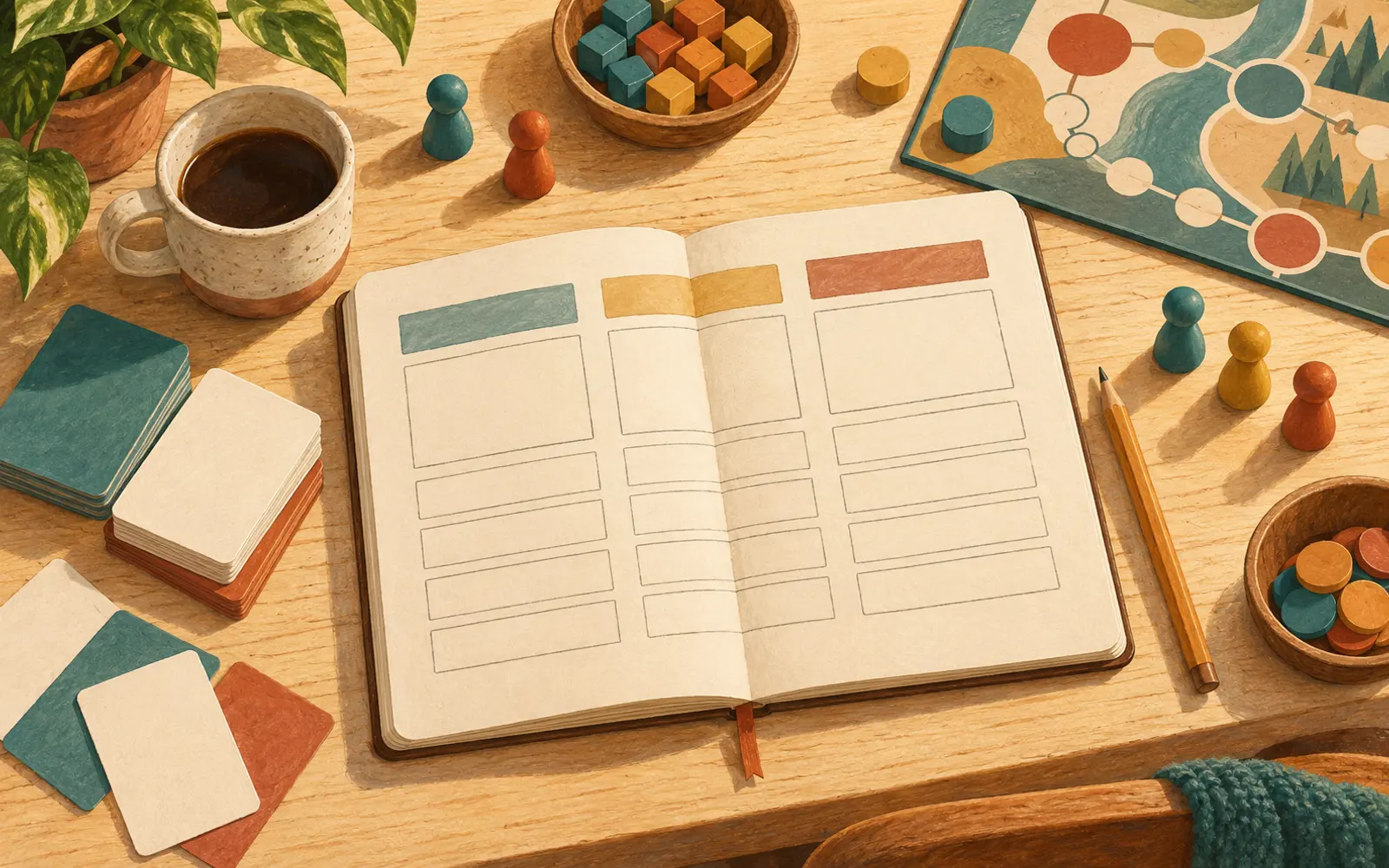
A quick note can be more useful than a score out of ten. Record the game’s name, the player count you tried and one specific reaction. For example: “Liked choosing between shared goals; want to check the two-player rules.” That is a hypothetical note, but it shows what to capture while the decision is fresh.
Leave space for an unresolved question. “Need to read the scoring section” is a reason to investigate further, not a reason to turn a brief introduction into a verdict. If you leave without buying, the note can guide a later rulebook read or another play.
Before choosing a box, name the people you would invite to play it and the evening when you could teach it. If neither comes to mind, keep it on the shortlist.
Sources checked October 19, 2026. Written and edited with AI assistance using the linked organiser and publisher information. The demo checklist is editorial advice, not hands-on testing. Both images are AI-generated illustrations.
SOURCES
Sources and further reading
EZ Trends links to primary documents, official announcements and established public-interest organizations. Consult the linked sources for current information.
- SPIEL Essen runs from October 22 to 25, 2026spiel-essen.de
- Saturday ticket noticespielessen.de
- official SPIEL appspiel-essen.de
- Asmodee’s fair programmeasmodee.de