
Webb Found Water Near Our Galaxy’s Black Hole—7 Things to Know
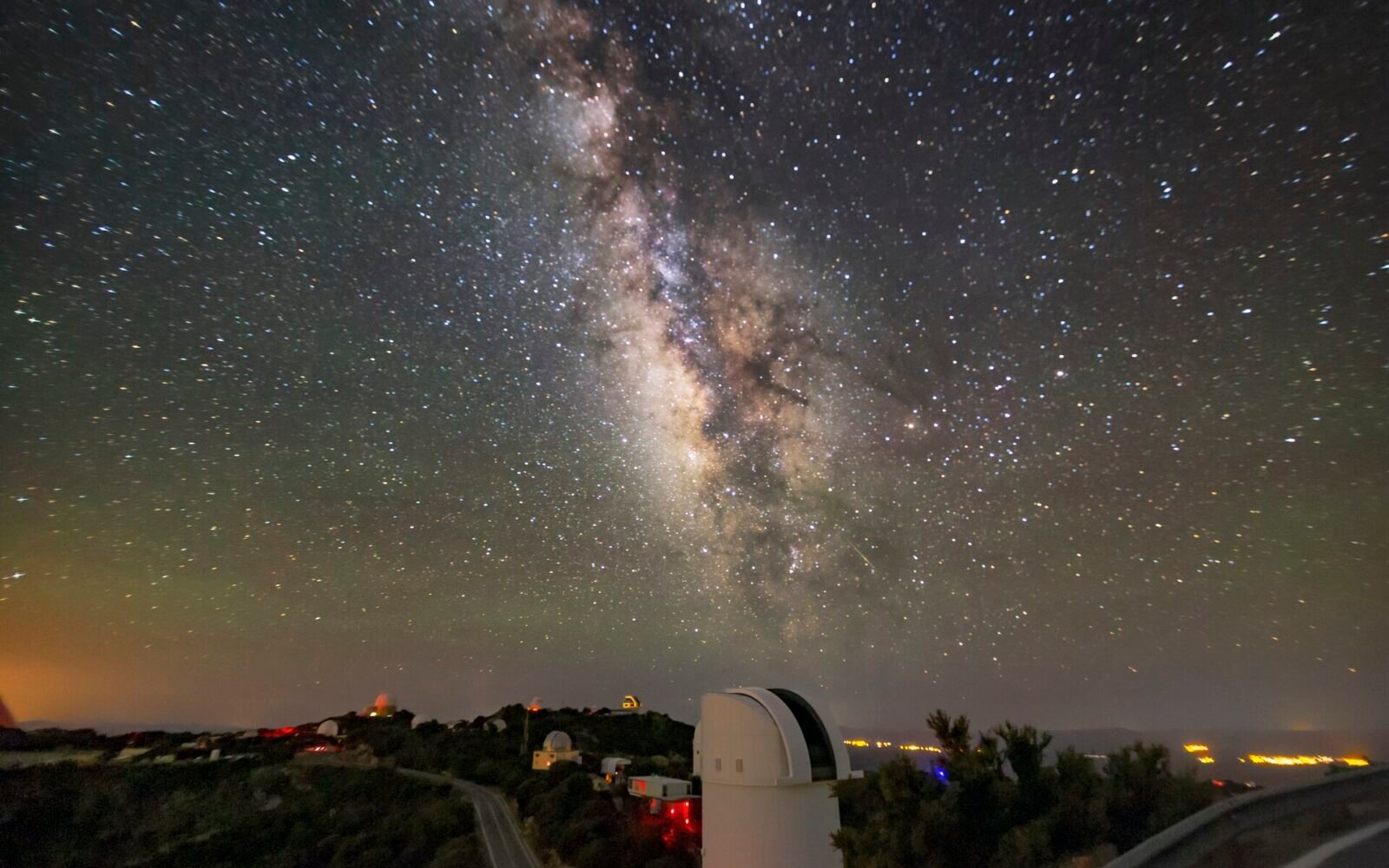
“Water near a black hole” is an irresistible headline, but it needs a careful picture. Astronomers did not find a floating reservoir beside Sagittarius A*. They found signatures of water in material surrounding a star living in the harsh central region of our galaxy.
1. The black hole is Sagittarius A*
At the Milky Way’s center sits a supermassive black hole roughly 26,000 light-years away. The neighborhood is crowded, energetic and difficult to observe through intervening dust.
2. Webb used infrared light
The Mid-Infrared Instrument can study wavelengths that reveal warm dust and molecules while penetrating obscuring material better than visible-light telescopes.
3. The water surrounds a star
Researchers analyzed infrared light from a star near the galactic center and detected water in its surrounding envelope. That context matters: the material is associated with stellar evolution, not the black hole itself.
4. Oxygen-rich dust survived too
The team found clear signatures of oxygen-rich dust. Survival in such an intense environment helps astronomers refine models of how dust forms and persists.
5. Dust is cosmic raw material
Dust grains contribute to future stars, planets and complex chemistry. Learning where they can survive tells us how material circulates through galaxies.
6. One detection is not a universal rule
The result expands what appears possible, but it does not mean every star near a black hole has the same protective envelope. More targets and repeated observations are needed.
7. The galactic center remains a laboratory
Extreme environments let scientists test stellar and chemical models under conditions impossible to reproduce on Earth. Webb has made that laboratory much easier to read.
Editor’s note: This story is designed as a practical briefing, not a substitute for official travel, medical, legal or safety guidance. Details can change; follow the linked primary source at the point of decision.
Primary source and further reading: Open the original source. Reporting checked August 31, 2026.
SOURCES
Sources and further reading
EZ Trends links to primary documents, official announcements and established public-interest organizations. Consult the linked sources for current information.