
Dust, Water and ‘Hypersoft’ X‑rays: What Webb, Chandra and APOD Tell Us Now

Intro: three releases, one emerging picture
This past week NASA released three pieces of observational evidence that, when read together, change how astronomers trace the interplay of dust, gas and newly forming or dying stars. The James Webb Space Telescope detected oxygen‑rich silicate dust and — for the first time near our galaxy’s center — signatures of water in a dust envelope surrounding the star IRS 3 (NASA Web release, Sep 10, 2026). The Chandra X‑ray Observatory team reported a newly recognized class of “hypersoft” X‑ray sources that emit unusually low‑energy X‑rays but likely strong ultraviolet radiation (Chandra release, Sep 9, 2026). And APOD published high‑resolution images of nearby star‑forming galaxies and regions such as M83 that underscore where dust lanes and hot young clusters coexist (APOD, Sep 11, 2026). Each release stands alone; together they suggest fresh pathways by which dust chemistry and hidden UV power sources influence where stars form and how we detect them.
What Webb actually detected near the galactic center
Webb’s mid‑infrared observations focused on IRS 3, a star near the center of the Milky Way. The data include a clear spectral signature consistent with oxygen‑rich silicate dust and — importantly — spectral evidence interpreted as water in the star’s surrounding dust envelope (NASA image article, Sep 10, 2026). That matters because the presence of water molecules and oxygen‑bearing silicates within a dusty shell changes both the chemistry available for later planet formation and the infrared emission we use to map obscured regions. Webb’s sensitivity to mid‑IR wavelengths makes it well suited to identify mineralogy and molecules in dust that block visible light, so the finding highlights how much physics can be hiding behind dusty veils in the galactic center environment.
Chandra’s ‘hypersoft’ X‑ray sources and the UV blind spot
Chandra’s analysis flagged 84 objects across several galaxies that show strong emission at Chandra’s lowest X‑ray energies but vanish at higher X‑ray energies — hence the label “hypersoft” X‑ray sources (Chandra release, Sep 9, 2026). The team infers that these sources should also produce strong ultraviolet radiation, but that UV can be absorbed by intervening gas (hydrogen and helium), making them effectively invisible in many surveys. The working interpretation in the release is that hypersoft sources likely involve compact binaries — white dwarfs, neutron stars or black holes accreting from companions — but their exact nature remains uncertain. The discovery came from combing the Chandra archive for objects bright at low X‑ray energies and faint or absent at higher energies; that archival approach is what removed a previous blind spot for these systems.
APOD, M83 and the visible fingerprints of dust lanes
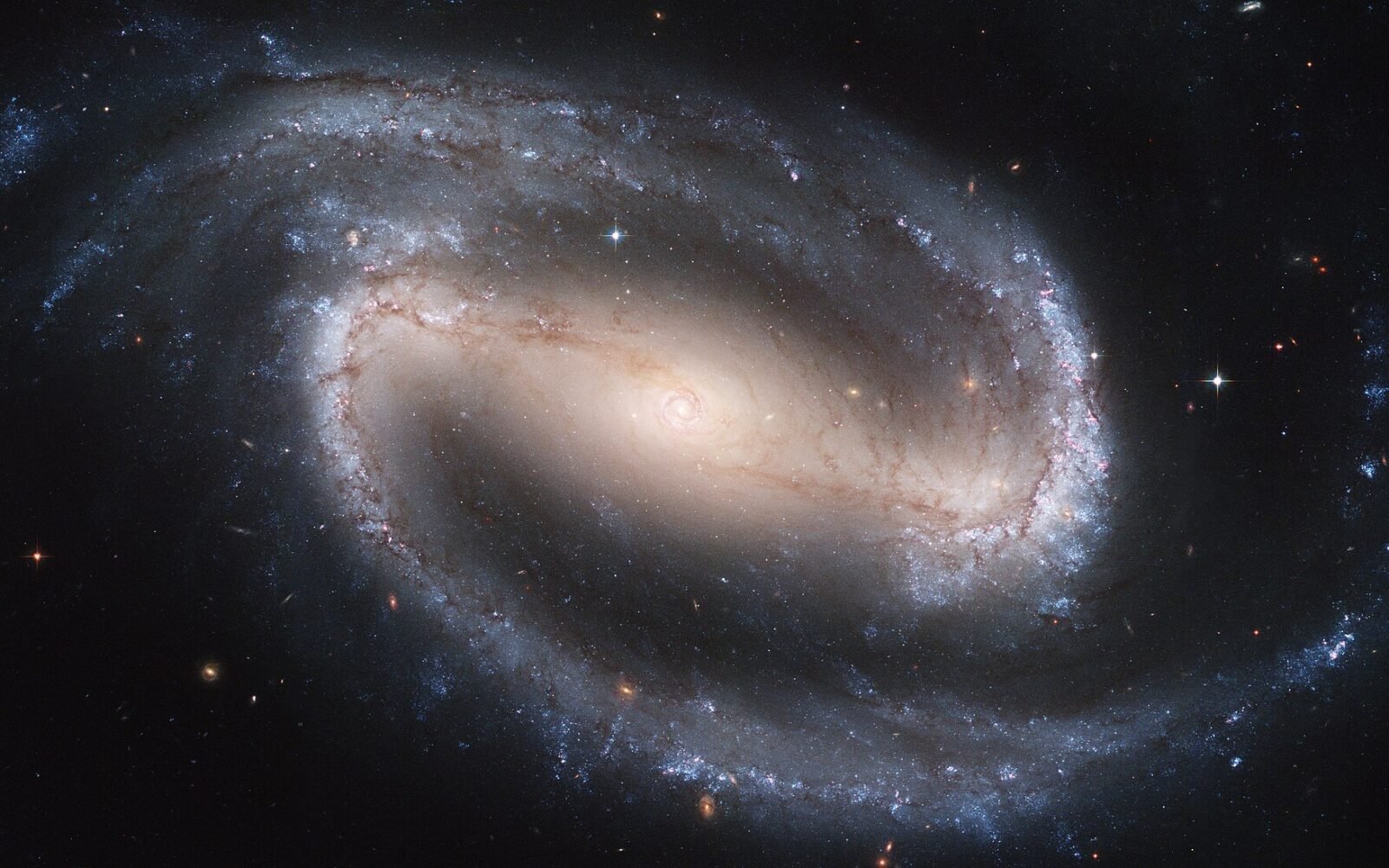
The APOD feature on M83 (Sep 11, 2026) emphasizes how clear optical and ground‑based imaging reveal spiral arms traced by dark dust lanes alongside bright blue clusters and reddish star‑forming knots. The APOD commentary notes that the galaxy’s core is also bright at X‑ray energies, indicating a concentration of compact remnants from past starbursts. In practical terms, APOD’s imagery reminds us that dust shows up in multiple ways — as opaque lanes in optical images, warm emission in the infrared (which Webb measures), and as an absorber of UV that can hide energetic sources. Together with Webb and Chandra, APOD’s images provide the spatial context: dust lanes and star clusters rarely live in isolation, and where you see one, you often need the others’ wavelength ranges to understand the physics.
Connecting the dots: dust, water, UV and hidden power sources
How do these three findings combine? Webb gives a spectral readout of dust mineralogy and a direct molecular detection (water) inside a dust envelope near the galactic center. Chandra indicates a population of sources that might flood their surroundings with UV — but whose UV is easily absorbed by neutral gas. APOD’s imagery shows where dust lanes and star‑forming regions spatially coincide. Together, they imply a chain: compact binaries or accreting remnants (the hypersoft sources) could inject ultraviolet photons that modify local gas, while dust — containing silicates and even molecules like water — both records that processing and alters how we detect the radiation. This is not a single proven mechanism but a plausible framework consistent with the three releases’ observations.
Worked example: how an archival search led to hypersoft sources (high‑level)
The Chandra team’s method is a short, practical lesson for researchers and advanced amateurs working with archives. At a conceptual level, their flow was: (1) gather Chandra observations for target galaxies; (2) create images or counts in low‑energy X‑ray bands and in higher‑energy bands; (3) flag sources that appear at low energies but disappear at higher energies; (4) cross‑check these candidates against optical/IR catalogs to look for counterparts. This exact procedure is outlined at a high level in the Chandra release. It’s a reminder that archival data can reveal new classes of objects when you look at atypical energy bands or combine datasets in new ways — and it’s why Chandra’s archive was decisive in spotting these hypersoft objects.
Decision checklist: what this means for observers and readers
If you follow these developments or plan outreach, use this checklist grounded in the releases’ claims:
1) Treat Webb’s IRS 3 water detection as a localized result: useful, but not proof of widespread water in all galactic center dust. (Source: Webb release.)
2) If searching archives, include low‑energy X‑ray bands and compare across energy ranges to avoid missing hypersoft candidates. (Source: Chandra release.)
3) Combine wavelengths: optical/IR imagery (APOD‑style views) can identify dust lanes that hide IR and UV features; add X‑ray checks where possible. (Source: APOD, Chandra, Webb.)
4) Expect ambiguity: hypersoft sources have plausible explanations (accreting compact objects), but the Chandra team explicitly leaves their true identities open.
Use this checklist to prioritize follow‑up observations rather than to draw definitive conclusions.
Limitations and uncertainties, explicitly tied to the releases
Each source lists caveats. Webb’s water identification is a first detection in that environment; it is specific to IRS 3’s dust envelope and arises from mid‑IR spectral signatures (NASA Webb image article). Chandra’s hypersoft class is based on archival selection effects and the difficulty of detecting low‑energy X‑rays; the team notes the objects could be different compact binary types and that absorption by interstellar gas can hide their UV output. APOD provides images and qualitative description but is not a primary spectral analysis; it offers spatial context rather than causation. In short: the observational pieces are robust within each instrument’s domain, but their synthesis as a causal chain remains an interpretive step that requires follow‑up observations and modeling. The releases themselves call for more study rather than final answers.
What to watch next: missions, archives and practicable actions
The releases point to concrete next steps that readers can track. The Chandra discovery relied on archive mining, so more archival searches (and cross‑matching with UV/optical/IR surveys) are likely to expand the hypersoft inventory. Webb will continue to probe dust chemistry in mid‑IR bands, which can refine how common water‑bearing dust shells are near the galactic center. APOD’s images remind observers where to target multiwavelength follow‑ups. For non‑specialists, the practical actions are: follow mission pages from NASA’s Webb and Chandra teams, watch for peer‑reviewed papers that detail spectra and population statistics, and use outreach images (APOD) as spatial guides for locations of interest. These releases explicitly encourage further observations rather than claiming closure.
Bottom line and practical takeaway
The Webb, Chandra and APOD releases together sharpen a working view: dusty envelopes are chemically richer than previously cataloged in some central‑galactic environments (Webb), there exist compact objects that emit unseen UV but low‑energy X‑rays (Chandra), and optical/IR images contextualize where dust and young stars co‑occur (APOD). This triangulation doesn’t resolve all questions — the Chandra team and Webb authors both note uncertainties — but it does change priorities: astronomers must pair mid‑IR mineralogy, low‑energy X‑ray searches and optical mapping to understand the life cycle of gas, dust and compact objects. For curious readers, the most useful immediate step is to follow the mission releases and archive announcements that will turn these early results into wider samples and firmer interpretations.
Sources
- Webb detection: “Dust and Water in Sagittarius A*” — NASA image article, Sep 10, 2026. https://www.nasa.gov/image-article/dust-and-water-in-sagittarius-a/
- Chandra hypersoft discovery: “NASA’s Chandra Unveils Mysterious X‑Ray Objects” — NASA/Chandra release, Sep 9, 2026. https://science.nasa.gov/missions/chandra/nasas-chandra-unveils-mysterious-x-ray-objects/
- APOD: “M83: The Southern Pinwheel” — APOD, Sep 11, 2026. https://science.nasa.gov/image-article/apod-2026-september-11-m83-the-southern-pinwheel/
SOURCES
Sources and further reading
EZ Trends links to primary documents, official announcements and established public-interest organizations. Consult the linked sources for current information.