
This Week in NASA Observations: A Once‑in‑a‑Century Moon Crater and Two APOD Standouts
1. Snapshot: two kinds of discoveries this week
This week’s NASA reporting pairs a geological surprise on the Moon with two vivid astronomy images. The Lunar Reconnaissance Orbiter (LRO) team identified a newly formed crater — officially named McGetchin — that researchers describe as the largest newly formed crater observed in the solar system during the LRO mission. Separately, NASA’s Astronomy Picture of the Day (APOD) featured two images: a telescopic view of Messier 33 (the Triangulum Galaxy) and a James Webb Space Telescope image of a dust pillar in the Carina Nebula nicknamed the “Treasure Chest.” Both types of observations illustrate how different instruments reveal complementary information: the LRO images show rapid, recent change on a nearby airless surface; the APOD images show long‑lived structure and star formation at vastly larger distances.
2. How McGetchin was found: image comparison and human review
McGetchin emerged from routine change detection. LROC image‑processing specialist Robert Wagner identified a bright spot circled by a dark halo while comparing stacked Wide‑Angle Camera maps from different years. The technique used is straightforward in concept: create time‑separated mosaics, align them, and flag pixels that change. But in practice the software produces many false positives (lighting shifts, shadows, and processing artifacts), so human review remains essential. In this case the feature spanned hundreds of pixels and showed the classic ejecta pattern of a fresh impact, prompting follow‑up with higher‑resolution Narrow‑Angle Camera images and thermal data from Diviner to confirm a new crater and altered surface properties.
3. What McGetchin looks like — size, timing, and origin details
The discovery paper and NASA reporting give concrete measurements. McGetchin is about 728 feet (≈222 meters) across and roughly 141 feet (≈43 meters) deep. The impact happened sometime between April 11 and May 22, 2024. Scientists estimate the striking rock was perhaps the size of a three‑ to six‑story building; the resulting hole spans roughly the length of two football fields and could fit three yellow school buses stacked vertically. The investigators characterize an event of this magnitude on the Moon as occurring on roughly century timescales — meaning impacts like this are rare but not unprecedented over long intervals.
4. A multi‑mile “cold spot”: thermal follow‑up with Diviner
After the crater was located in visible imagery, the Diviner thermal instrument measured nighttime surface temperatures and revealed a notable effect: an area about 4 miles across around the crater is cooler at night than surrounding terrain by about 16°F (≈9°C). The interpretation reported by the Diviner team is that the impact “fluffed up” the regolith — the fine, powdery lunar surface layer — making it less dense and therefore less able to store heat overnight. That colder ring or “cold spot” extends well beyond the crater rim, which is important for understanding how impacts rework the surface at scales larger than the hole itself.
5. Why this matters for future lunar operations and science
The physical changes around McGetchin are not merely academic. If impacts modify regolith density over multi‑kilometer patches, they can change traction and bearing for rover wheels, affect how lander exhaust interacts with the surface, and influence thermal behavior that matters for instruments. For science, large, fresh craters expose subsurface materials and create observable ejecta patterns that let geologists infer projectile energy, surface cohesion, and layering. Operational planners for human and robotic missions can use repeated mapping from LRO to refine hazard models and routing choices near areas with unusual cold spots or recent impacts.
6. LRO’s toolkit: WAC and NAC, and why both matter
LRO carries a set of cameras with different roles: the Wide‑Angle Camera (WAC) produces global to regional mosaics with pixel sizes on the order of football fields, which is ideal for detecting large changes across the whole Moon. The Narrow‑Angle Camera (NAC) provides much finer detail (~3 feet per pixel in the McGetchin follow‑up), allowing scientists to measure crater morphology and ejecta distribution. The workflow reported by the LRO team uses WAC to flag candidate changes and NAC to confirm and characterize them. Ancillary instruments like Diviner (thermal) complement imaging by adding environmental context.
7. APOD: Messier 33 — a nearby spiral that helps measure the cosmos
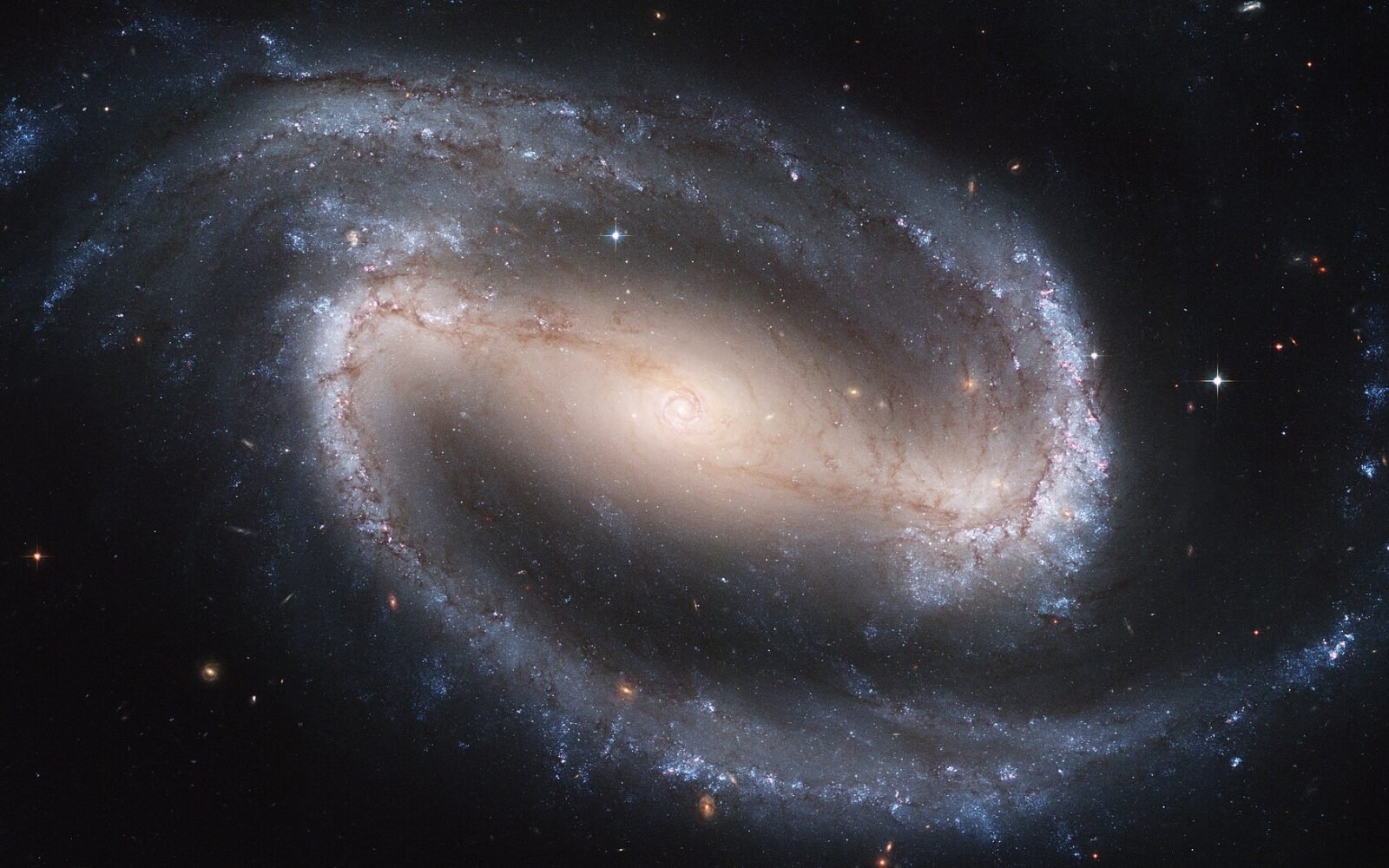
APOD’s Sept. 18 entry showcases Messier 33, the Triangulum Galaxy: a face‑on spiral more than 50,000 light‑years across and about 3 million light‑years from the Milky Way. M33 is the third largest member of our Local Group (after Andromeda and the Milky Way) and contains bright blue clusters and pink star‑forming regions; the large NGC 604 complex is a standout feature. Astronomers use well‑measured variable stars in objects like M33 to refine distance estimates — a practical reminder that crisp imaging of nearby galaxies continues to serve as a cosmic yardstick for larger studies.
8. APOD: a JWST‑captured Treasure Chest in the Carina Nebula
APOD’s Sept. 17 image is a James Webb Space Telescope view of a dust pillar in the Carina Nebula that resembles an open treasure chest. The pillar sits roughly 7,500 light‑years away and houses a compact cluster with an estimated ~70 stars; that stellar nursery is thought to be only about 1.3 million years old and includes at least one star ≈19 times the mass of the Sun. JWST’s infrared sensitivity highlights the young stars and the interplay of radiation and stellar winds sculpting the pillar — a vivid complement to LRO’s focus on mechanical change in our own neighborhood.
9. Practical takeaway: how to follow and what to share (checklist & example)
For an educator, backyard observer, or amateur astronomer wanting to use these items in outreach or study, here’s a short checklist and one worked example:
- Checklist: 1) Bookmark the NASA LRO page for updates; 2) Use APOD entries as discussion images with captions; 3) For Moon events, combine WAC/NAC images with Diviner summaries to explain thermal effects; 4) Cite dates and instrument names to avoid confusion.
- Worked example (classroom): show the McGetchin dimensions (728 ft across). Convert to area: using A=πr² with r≈364 ft gives A≈π×(364)²≈416,000 sq ft ≈9.5 acres — a concrete size students can visualize. Contrast that with M33’s 50,000 light‑year diameter to teach scale differences between local geological processes and galactic structure.
- Link practical next steps: If you plan a public viewing or lecture, pair an APOD image with the LRO story to highlight different observational strategies — thermal vs. visible imaging, near vs. deep space.
10. Limitations, uncertainties, and where to watch next
All reporting here is drawn from the cited NASA and APOD posts. The McGetchin timeline is constrained only to the interval between two imaging epochs (April–May 2024), so the precise impact time within that window is uncertain. Estimates of projectile size and frequency are model‑based and reported by the LRO team; such estimates have uncertainties tied to assumptions about impact velocity, angle, and target properties. Thermal interpretations (the cold spot caused by lower regolith density) are based on Diviner observations and modeling; further field analogs or targeted measurements would refine those conclusions. For public follow‑up, continue watching LRO product releases and APOD entries through NASA Science; both sources note instrument names, dates, and authors for traceability.
Sources
- NASA Science: “NASA’s Moon Orbiter Spots New, ‘Once‑in‑a‑Century’ Moon Crater” (Sep 16, 2026). Link: https://science.nasa.gov/solar-system/moon/nasas-moon-orbiter-spots-new-once-in-century-moon-crater/
- NASA APOD: “Messier 33: The Triangulum Galaxy” (APOD, Sep 18, 2026). Link: https://science.nasa.gov/image-article/apod-2026-september-18-messier-33-the-triangulum-galaxy/
- NASA APOD: “A Treasure Chest in the Carina Nebula” (APOD, Sep 17, 2026). Link: https://science.nasa.gov/image-article/apod-2026-september-17-a-treasure-chest-in-the-carina-nebula/
SOURCES
Sources and further reading
EZ Trends links to primary documents, official announcements and established public-interest organizations. Consult the linked sources for current information.