
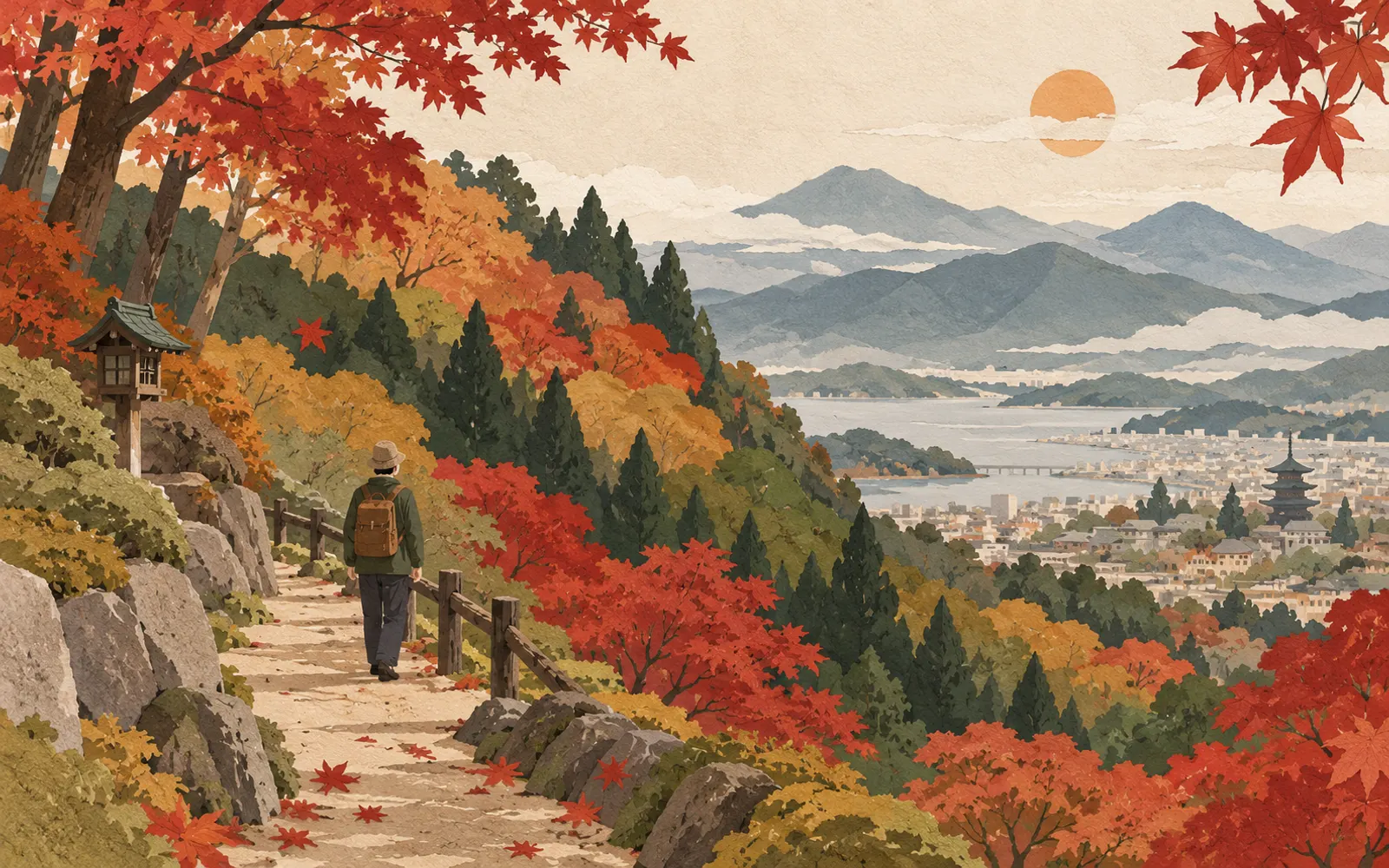
Japan autumn foliage 2026: how to plan around a moving forecast
An October trip can catch mountain colour while Tokyo’s trees are still green. Choosing the right place matters as much as choosing the week.
Japan Meteorological Corporation released its second autumn foliage forecast on October 1. For travellers planning the next few weeks, the useful detail is how much the dates differ by location and tree type. A red maple and a yellow ginkgo in the same city need not reach their seasonal colour together.
That makes a single “best week for Japan” a poor basis for an itinerary. Start with your fixed travel dates, then look at the places that fit them. Treat the leaf-viewing stop as one part of a trip you would still enjoy if the weather changed.
Read the forecast’s definition before its dates
JMC’s city forecasts estimate when most leaves on a reference tree have turned red or yellow, using Japan Meteorological Agency observation standards. They do not give every garden in a city one shared peak day. Its October 1 forecast separates maple and ginkgo dates:
| City | Red leaves | Yellow leaves |
|---|---|---|
| Sapporo | November 4 | November 3 |
| Tokyo | November 28 | November 26 |
| Kyoto | December 11 | November 27 |
Those are estimates, not reservations you can make with a tree. Keep the release date beside any forecast you save, so a screenshot from an earlier update does not quietly become the basis for a non-refundable booking.
Why another guide may give you a wider window
Japan-guide’s October 7 regional outlook lists mid-November to early December for Kyoto and late November to early December for Tokyo. These are broad viewing windows. They answer a different planning question from a reference-tree date, so don’t average the two into a supposedly more precise prediction.
For October, the same outlook puts Kamikochi in a mid-to-late-October window and Nikko between mid-October and early November. Check its current-condition reports as well as the calendar. A forecast helps you shortlist a region; a recent report helps you decide whether a particular outing still makes sense.
The practical question is specific: which park, valley or garden do you want to visit? Save that location’s name with the report, rather than a screenshot labelled only “Japan autumn.” It will make the next check much easier.

If you’re travelling this month
The Japan National Tourism Organization’s October guide points foliage seekers towards northern and higher-altitude areas. It places the stronger city colours in Tokyo and Kyoto later, generally in November. The guide also notes the temperature contrast between warmer Kyushu and colder Tohoku, a useful reminder when packing for a route that crosses regions.
If your flights already put you in Tokyo or Kyoto during October, you can keep the city stay. Decide whether seeing leaves is worth adding a separate regional leg, including the transfer time and another hotel check-in. A day trip only works if its actual transport connections fit your day; a nearby-looking dot on a map isn’t enough.
Choose an alternative for the same day before paying for the outing. It might be a museum you already wanted to visit or an unhurried neighbourhood walk. Put opening hours and any booking requirement in the same note as your foliage plan. That way a change of plan takes a few minutes rather than another evening of research.
Use seasonal averages for orientation
JNTO’s autumn leaves overview describes the season moving from colder northern areas towards the south, with mountains colouring before lower urban locations. Its city table includes historical averages and notes that weather can change the forecast. An average is useful when deciding which month to investigate; it cannot confirm what a path will look like on the morning you arrive.
Before committing, keep a short note with four fields: destination, report date, transport plan and cancellation deadline. Recheck the first two before the last one passes. If the only reason for a costly detour is a photograph of perfect red leaves, look for a recent, dated condition report before making that detour non-refundable.
For a trip booked around food, architecture or visiting friends, foliage can stay flexible. Pick one viewing stop that fits the route and leave room to change it. You can make that decision much closer to the day than the decision about your international flights.
Forecasts and guidance checked October 7, 2026. Linked outlooks may change. Researched and edited with AI assistance; both images are AI-generated editorial illustrations.
SOURCES
Sources and further reading
EZ Trends links to primary documents, official announcements and established public-interest organizations. Consult the linked sources for current information.
- October 1 forecastn-kishou.com
- Japan-guide’s October 7 regional outlookjapan-guide.com
- Japan National Tourism Organization’s October guidejapan.travel
- autumn leaves overviewjapan.travel