
Reading Three APOD Images: Galaxy Merger, Eclipse Chase, and the Pelican Nebula
Why these three APODs matter right now
Between September 4 and 7, 2026, Astronomy Picture of the Day (APOD) featured three visually and methodologically distinct images: a pair of interacting spiral galaxies given a Hawaiian name and recorded with the Gemini North telescope (Sep 4), an in-flight cockpit view of a total solar eclipse captured during NASA’s WB-57F high-altitude campaign (Sep 5), and a deep, 25-hour-exposure image of the Pelican Nebula highlighting gas, dust and active star formation (Sep 7). Each picture is accompanied by an explanation written or edited by APOD staff and credits to the observatory or photographer. Taken together, the entries show how instrument choice, observing vantage point and exposure strategy reveal different physical processes — from violent galactic encounters to fleeting eclipse geometry to slow, localized star formation in nebulae.
The Gemini view: NĀ ʻUHANE MĀHOE HUKI PŪ I KE OLA (Sep 4)
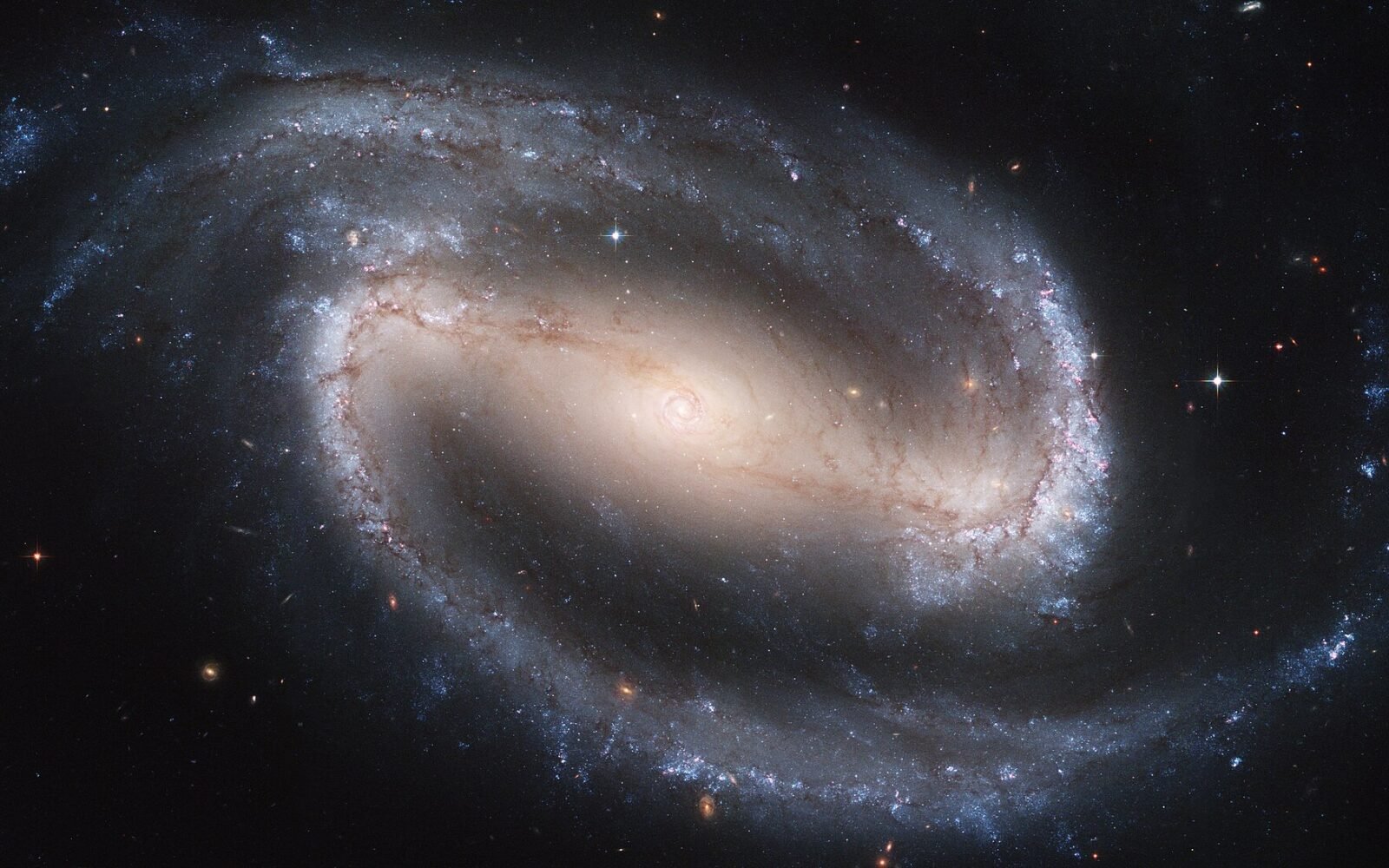
The Sep 4 APOD shows an interacting pair of spiral galaxies (NGC 7253 / Arp 278), imaged with the 8.1-meter Gemini North telescope on Maunakea and given a Hawaiian name by high school students working with Gemini and the University of Hawaiʻi Project Hōkūlani. The APOD text places the system about 200 million light-years away in Pegasus and highlights that collisions like this trigger bursts of star formation as gas clouds are compressed. The photograph’s provenance (Gemini/NOIRLab/NSF/AURA image processing credits are listed on APOD) is also part of the story: professional observing facilities and image processing can reveal interacting arms and faint tidal structures associated with gravitational encounters.
Why the Hawaiian naming and partnership matter
APOD’s caption notes that the Hawaiian name — “The Twin Spirits Pulling Together Creating Life” — was chosen by students in a joint internship program. That detail illustrates two important points for communicators: (1) public-facing astronomy work often includes outreach and culturally informed naming, and (2) APOD captions include both scientific context and human or programmatic background. When sharing the image, preserve the credit line and mention the student-naming partnership as APOD did, because it is part of the documented record on the image page.
Chasing the Moon’s shadow from 50,000 feet (Sep 5)
The Sep 5 APOD shows a cockpit view taken during a NASA WB-57F research flight that followed the Aug 12, 2026 total solar eclipse off the coast of Iceland. APOD explains the purpose: at about 50,000 feet, the WB-57F pilots flew along the path of totality with high-resolution cameras to maximize time in the Moon’s shadow and to record eclipse data above clouds, dust and atmospheric water vapor that can degrade ground-based observations. The caption names visible planets in the frame (Venus left of center; Jupiter and Mercury just visible to the right of the eclipsed Sun) and stresses the advantage of reduced atmospheric interference from a high-altitude aircraft platform.
The Pelican Nebula: gas, dust and long exposures (Sep 7)
The Sep 7 APOD is a deep view of the Pelican Nebula (IC 5070) assembled from data taken in Utah and is described on APOD as incorporating 25 hours of exposure. The caption emphasizes filamentary dark dust and bright ionization fronts where energetic young stars are transforming cold gas into hot gas. The picture’s long-integrated exposure brings out faint structures and contrast inside the nebula, showing how patient imaging reveals boundaries and tentacles of cold gas that shorter exposures miss.
Three observing strategies, three scientific payoffs
These APOD entries illustrate a simple mapping between method and discovery: large-aperture telescopes (Gemini North’s 8.1 m) resolve structure and faint tidal features in distant galaxies; long cumulative exposures (25 hours) reveal low-surface-brightness filaments and dust structures inside nebulae; and high-altitude airborne platforms bypass much lower-atmosphere turbulence and obscuration for cleaner views of transient geometry like an eclipse. Those are not competing methods so much as complementary tools that emphasize different physical effects — dynamics of mergers, the microphysics of star-forming fronts, and the geometry of a shadowed Sun with planets in the frame.
Worked example: comparing three observing choices
Use the three APOD entries as a practical comparison when deciding how to study a target. Concrete, source-based parameters from the APOD captions: Gemini North 8.1-meter aperture (Sep 4); WB-57F at ~50,000 feet for the Aug 12 eclipse (Sep 5); and a 25-hour integrated exposure for the Pelican Nebula (Sep 7). If your objective is resolving faint tidal arms in distant galaxies, the Gemini example shows how a large professional telescope can help; these captions do not establish a minimum telescope size for every observing goal. If your objective is to study solar eclipse corona or planets near the Sun free of lower-atmosphere scatter, an airborne platform or space-based vantage offers clear advantages. If you want to map fine dust filaments and low-brightness nebulosity, long total exposure times are the path. This side-by-side view is drawn directly from the APOD explanations and image credits and helps decide trade-offs without asserting capabilities beyond the listed descriptions.
Decision checklist for educators and social editors
When you pick an APOD image to share or teach from, follow a small checklist grounded in the APOD pages themselves:
1) Check the applicable image licence or obtain permission before reuse; giving credit alone is not permission. Preserve the credit line exactly as APOD lists it (APOD captions include specific image credits and copyright).
2) Link to the APOD entry you used — the APOD pages are the canonical explanation for each image.
3) Note observing method and instrument as part of the caption (Gemini 8.1 m, WB-57F at 50,000 ft, or the listed exposure time).
4) Avoid technical extrapolations not present on the APOD page; use APOD’s explanation as your factual baseline.
5) When summarizing for learners, emphasize what the observing choice reveals rather than making unverified claims about, for example, detectability with consumer telescopes.
Practical takeaways for hands-on outreach
Three short, APOD-grounded actions for outreach or a classroom: (A) Use the Gemini galaxy image to introduce tidal interactions and starburst triggers — highlight the instrument and distance given on APOD. (B) Use the WB-57F eclipse frame to show how vantage point changes what you can see — discuss the advantage of observing above clouds and water vapor as APOD explains. (C) Use the Pelican Nebula to teach signal accumulation and why long exposures matter — APOD reports a 25-hour integration to bring out faint dust and ionization fronts. In every case, copy the credit exactly and point learners to the APOD page for further reading.
Limits and responsible sharing
APOD captions give concise, checked context; they do not provide raw observational logs, licensing beyond the listed credit line, or step-by-step observing instructions for amateurs. When you reuse APOD images or their concepts, do not assume public-domain reuse unless the credit line explicitly states that. The APOD pages for these dates list precise credits and image provenance; use those lines in any social post or educational material. Also, avoid implying direct comparability beyond what APOD describes — for example, do not claim that an amateur telescope can reproduce Gemini-scale detail or that any private charter flight will match the WB-57F campaign’s scientific sensors. The APOD entries themselves flag the instruments and observing circumstances that define the images’ limits.
How to cite these APOD pages and next steps
Short practical citation template (based on APOD page structure): include the APOD title and date, the full image credit as printed on the APOD page, and a link back to the APOD entry. Example elements to copy exactly from each APOD page include the image credit line and the APOD URL. If you want to dive deeper, follow the links inside each APOD caption to the observatory or mission that provided the data — APOD pages embed direct credits and links to Gemini, NASA/JSC WB-57F campaign notes, and the photographer or processing team for the Pelican image. These link pathways are the most reliable route to original data or press materials listed on APOD.
More ways to explore space
For a broader look at how observing tools shape astronomy, explore our Roman Space Telescope explainer and guide to space missions worth watching.
Sources
- APOD: “Na Uhane Mahoe Huki Pu i ke Ola” — APOD (Sep 4, 2026). Image and caption credit: International Gemini Observatory/NOIRLab/NSF/AURA; Gemini North 8.1 meter telescope; Project Hōkūlani student naming details. Source: Read the original NASA/APOD entry
- APOD: “Chasing the Moon’s Shadow” — APOD (Sep 5, 2026). Image and caption note: NASA WB-57F high-altitude research aircraft at ~50,000 feet; eclipse observations above clouds and atmospheric water vapor; planets visible in the frame. Source: Read the original NASA/APOD entry
- APOD: “The Pelican Nebula in Gas, Dust, and Stars” — APOD (Sep 7, 2026). Image and caption note: deep exposure from Utah totaling 25 hours; filamentary dust and an ionization front; image credit Mark Killion. Source: Read the original NASA/APOD entry
SOURCES
Sources and further reading
EZ Trends links to primary documents, official announcements and established public-interest organizations. Consult the linked sources for current information.
- Read the original NASA/APOD entryscience.nasa.gov
- Read the original NASA/APOD entryscience.nasa.gov
- Read the original NASA/APOD entryscience.nasa.gov